

Updated Mar 24, 2026
Check Engine Nation: How Car Costs Are Reshaping American Life
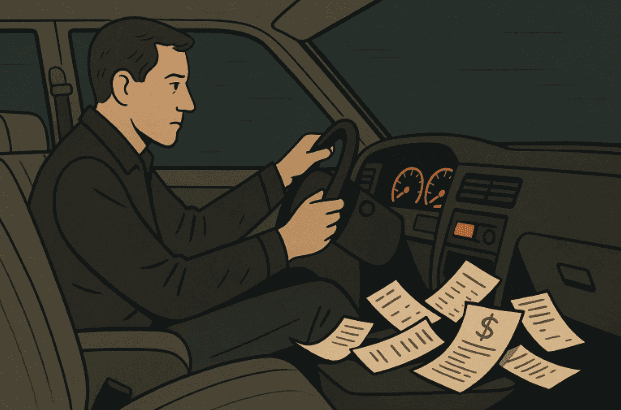
* image of man driving vehicle while getting bogged down with receipts and tickets
It’s getting more and more expensive to own a car–and not just because of gas prices. For millions of Americans, the cost of routine car maintenance is causing strain, and many others are unable to afford an unexpected repair. As the cost of vehicle maintenance and insurance climbs, drivers are making increasingly difficult trade-offs to stay on the road.
We surveyed 1,000 U.S. adults who own or lease and regularly drive a vehicle. The findings reflect the cost-of-living crisis we hear about on the news, with people of all income levels worried about how they’d afford a surprise repair. We learned that American drivers are skipping payments, missing out on family time, and testing out DIY fixes to avoid a costly mechanic visit. Here’s what we learned about the true cost of car ownership in the USA.
Key Takeaways
Nearly 2 in 5 drivers have faced $1,000+ in unexpected car costs in the last year, and 1 in 8 were hit with expenses topping $3,000. Nearly 3 in 5 (57%) covered those costs through debt or drained their savings.
Fifty-four percent of U.S. drivers say they'll likely struggle to cover car-related expenses in the next six months, and one in four (26%) already expect to fall behind.
38% of drivers ignored a check‑engine or warning light—most common among Gen Z (43%). This was the top risky behavior, ahead of driving on bald tires (25%), worn brakes (25%), and cracked windshields (19%).
One in ten drivers switched to liability‑only insurance coverage to save money, and 7% canceled coverage altogether. Among Gen Z, those numbers jumped to 23% and 10%.
Half of drivers said car costs have shifted their life plans — 24% skipped family events, 20% cut back on dating or social life, and 17% turned down jobs to avoid commutes.
Nearly 7 in 10 drivers are stressed about the rising cost of driving — and 1 in 3 say it’s a source of anxiety.
America’s Costly Commute
As vehicle repair costs rise, many Americans are taking calculated risks behind the wheel. Even though they know the risks when driving with mechanical issues, it’s becoming necessary for Americans who have limited options. In a time when many Americans are tightening their budgets, car repairs are often a lower priority than bills or groceries.
Thirty-eight percent of drivers reported driving with a check engine or warning light in the past year — the most common issue cited. An additional 26% drove with either bald tires or worn brakes, while 19% continued driving despite having a cracked or shattered windshield.
Drivers earning under $40,000 per year were much more likely to report mechanical lapses. Forty-seven percent drove with a warning light, and 29% with bald tires. Risky maintenance behaviors were also more common among younger generations. Among Gen Zers, 43% knowingly drove with a warning light on, 39% with worn or grinding brakes, 33% with bald or underinflated tires, and 30% with steering issues.
How Surprise Car Bills Are Wrecking Budgets
Car trouble rarely waits for payday. For many drivers, the real financial strain doesn’t come from insurance or gas, but from repair bills that hit without warning. Having to rearrange your budget to accommodate a costly repair is a significant stressor for many Americans.
Made with Flourish • Create a chart
Unexpected car costs are becoming routine. Forty-three percent of drivers reported spending over $1,000 in unplanned auto expenses in the past year, while 10% said their costs exceeded $3,000.
To help cover unexpected vehicle expenses, 33% turned to credit cards, 22% pulled from savings, 17% borrowed money from family or friends, and 10% skipped or delayed other bills.
Sometimes the trade-off isn't worth it, and for more than 1 in 3 (35%) drivers, they're just ignoring the repairs altogether.
For households already managing tight budgets, a surprise mechanic visit can mean late rent, missed payments, or prolonged debt. This makes car ownership one of the most financially unpredictable parts of everyday life.
Coverage on the Line
Faced with rising expenses, many drivers are cutting back on their car insurance, even if it means sacrificing coverage. One in ten drivers said they’ve switched to liability-only coverage to save money, and 7% canceled their policies altogether.
Made with Flourish • Create a chart
The squeeze is sharpest among younger drivers. Nearly 1 in 4 Gen Z drivers (23%) said they downgraded coverage in the past year, and 1 in 10 (10%) dropped insurance entirely — rates more than double the national average.
While slashing insurance coverage may provide long-term savings, it’s a risky budget move in the long term. About 1 in 7 drivers (15%) admitted to skipping or delaying a premium payment, and others removed optional protections like roadside assistance or rental coverage. This leaves drivers responsible for rentals and tow trucks in the case of an accident or breakdown.
Lapses in coverage can lead to legal penalties in states where car insurance is mandatory, alongside higher future premiums. That’s not to mention what will happen if an uninsured person is in an accident–they may be fully responsible for all costs and repairs.
How Americans Are Adjusting Behind the Wheel
Many drivers are turning to less drastic cost-saving measures before cancelling their coverage or driving with a broken windshield. Rising costs nationwide are reshaping transportation habits, resulting in shorter trips to postponed upgrades.
Made with Flourish • Create a chart
Nearly half (45%) now combine errands or cut back on unnecessary drives to save on gas and wear. One in five (22%) avoid long trips altogether, and 16% carpool more often. Some are scaling back even further: 14% have stopped driving for nonessential activities, and 12% rely more on public transit, biking, or walking.
The way people think about car ownership is shifting, too. Twenty-eight percent have delayed buying a new vehicle, 19% are keeping their current car longer than planned, and 11% have sold a second car to save money. About a quarter say they’re cutting insurance extras, pushing off small repairs, or learning quick DIY fixes to stretch their budgets. Across the board, Americans are making changes to their driving habits to save money.
Trust Deficit at the Mechanic’s Shop
Repair shops are no longer the automatic first step when something goes wrong. Cost, convenience, and trust are making customers think twice before going to the mechanic. Many drivers are holding off on professional repairs — and for some, that choice comes with risk.
Made with Flourish • Create a chart
Affordability was the top reason drivers avoided repairs, cited by 25% of respondents. Another 18% said their issue didn’t feel urgent, and 9% chose not to miss work, even if that meant driving with a known problem. These figures rose among younger drivers, with one in five Gen Zers citing risking it to avoid missing work or losing income, and 30% of millennials delaying repairs to afford essentials.
Among respondents, 6% cited trust as the reason they avoid the mechanic, illustrating skepticism among some drivers. In all, the data shows that even when drivers know they should seek out a professional opinion, many are unable to due to their budget and their work schedules.
DIY Nation – The Rise of the TikTok Mechanic
Many drivers are looking at their car issues and thinking, “I could fix that myself”. With online tutorials and AI tools at their fingertips, many American drivers are going the DIY route. With costs rising, rolling up your sleeves and watching a few TikToks is becoming a standard solution for drivers on a budget. However, the actual skill level among American drivers varies, limiting their DIY options.
Made with Flourish • Create a chart
DIY know-how isn’t universal among U.S. drivers, though. Nearly 1 in 5 don’t feel comfortable even pumping gas, and close to 30% aren’t comfortable checking oil levels or tire pressure. More than half say they wouldn’t feel prepared to change a flat tire, showing that many lack the basic hands-on skills needed to handle common roadside issues.
For Gen Z drivers, the gaps are even more alarming. One in three aren’t comfortable pumping their own gas or checking tire pressure, and 40% don’t know how to check oil levels. Most say they couldn’t handle common repairs, with 56% unable to jump-start a battery, 57% unable to change a flat tire, and nearly two-thirds (63%) unable to replace a headlight or taillight bulb. Despite their online prowess, Gen Z seems not to have polished their car repair skills yet.
Made with Flourish • Create a chart
Drivers today are increasingly picking up car repair skills on the fly. More than 1 in 4 (26%) have watched online tutorials to tackle their own fixes, and 15% have even turned to AI tools like ChatGPT for guidance. Rather than relying solely on mechanics or prior experience, many are learning as they go, showing how digital resources are reshaping the way people approach car maintenance.
Financial Fragility Under the Hood
Even after you drive off the lot, you’re still paying for your vehicle. From fuel and maintenance to insurance and loan payments, cars carry ongoing financial pressure, and for many Americans, that pressure has little margin for error. With layoffs rising and job growth slowing, paying for vehicle upkeep without income is a reality many Americans have to plan for.
Made with Flourish • Create a chart
Many drivers don’t have emergency funds for their vehicles. If income stopped, a quarter of respondents said they’d fall behind on vehicle expenses within one to two months, while 13% wouldn’t make it even two weeks. Only 15% could cover their car costs for more than six months.
Among those earning under $40,000 per year, 21% would fall behind on vehicle costs in less than two weeks, and just 6% could sustain costs for more than six months. In contrast, nearly half (48%) of drivers earning $150,000 or more said they’d have at least six months of cushion. This points to a significant discrepancy between socioeconomic classes, with lower-income Americans facing more financial stress.
Stress on the Road
For many drivers, the rising cost of driving-related expenses is a new stressor in their everyday lives. Nearly 7 in 10 (68%) said they feel stressed about rising vehicle costs, and 1 in 3 (33%) described that stress as constant.
Made with Flourish • Create a chart
The pressure is sharpest among younger and lower-income drivers. Three-quarters of Gen Z drivers (74%) said they feel stressed about car expenses, and 39% said that stress is constant — the highest of any group. Millennials weren’t far behind at 71% and 36%, respectively.
Even for higher-income households, rising costs are taking their toll. 61% of those earning $150,000 or more still reported feeling stressed about driving costs, showing that car anxiety cuts across income lines.
Life Plans in Park
For many Americans, car costs influence decisions beyond the garage. When driving to an event is too costly, many Americans are choosing to skip things entirely. From family gatherings to career opportunities, the financial burden of staying on the road is shaping major life milestones.
Made with Flourish • Create a chart
Vehicle costs are forcing compromises. One in four drivers said they’ve skipped family events due to the cost of driving, one in five (20%) have cut back on their dating or social lives, and 17% have turned down job opportunities to avoid commute expenses.
Among Gen Z drivers, the impact is even greater. Nearly 30% have cut back on their social and dating lives, 27% have skipped family gatherings, 20% have delayed moving, and 15% have postponed further education due to vehicle-related expenses. People are shaping their lives around the cost of their vehicles, when it should be the other way around.
The Road Ahead
Car ownership has become a defining stress point in American life. Even among Americans who are financially prepared to pay for last-minute repairs, car maintenance is a leading stressor in daily life. The financial weight of driving is reshaping the way people work, live, and plan their futures.
For half the country, maintaining a vehicle now means making compromises — not just about money, but about milestones, safety, and independence. As the middle class shrinks and the freedom once promised by car ownership now feels increasingly out of reach, more and more Americans must choose between safety and affordability.
Methodology
We surveyed 1,000 U.S. adults who own or lease and regularly drive a vehicle. Responses were collected across a nationally representative sample. We also examined differences by household income, age, and gender. Percentages may not total 100% due to rounding.
About SaveMaxAuto
SaveMaxAuto helps drivers save money on car insurance with trusted reviews, tools for coverage comparisons, tips, and partnerships. If you’re navigating unexpected costs, SaveMaxAuto is built for today’s drivers.
Fair Use Statement
You may reuse this content for noncommercial purposes with proper attribution to SaveMaxAuto and a link back to our original research.
