
These real-user reports help ground expectations before we look at how rates vary by model and what influences cost most. Insurance pricing is shaped by safety ratings, repair costs, theft rates, and your personal profile, but hearing directly from other Hyundai drivers gives a helpful baseline.
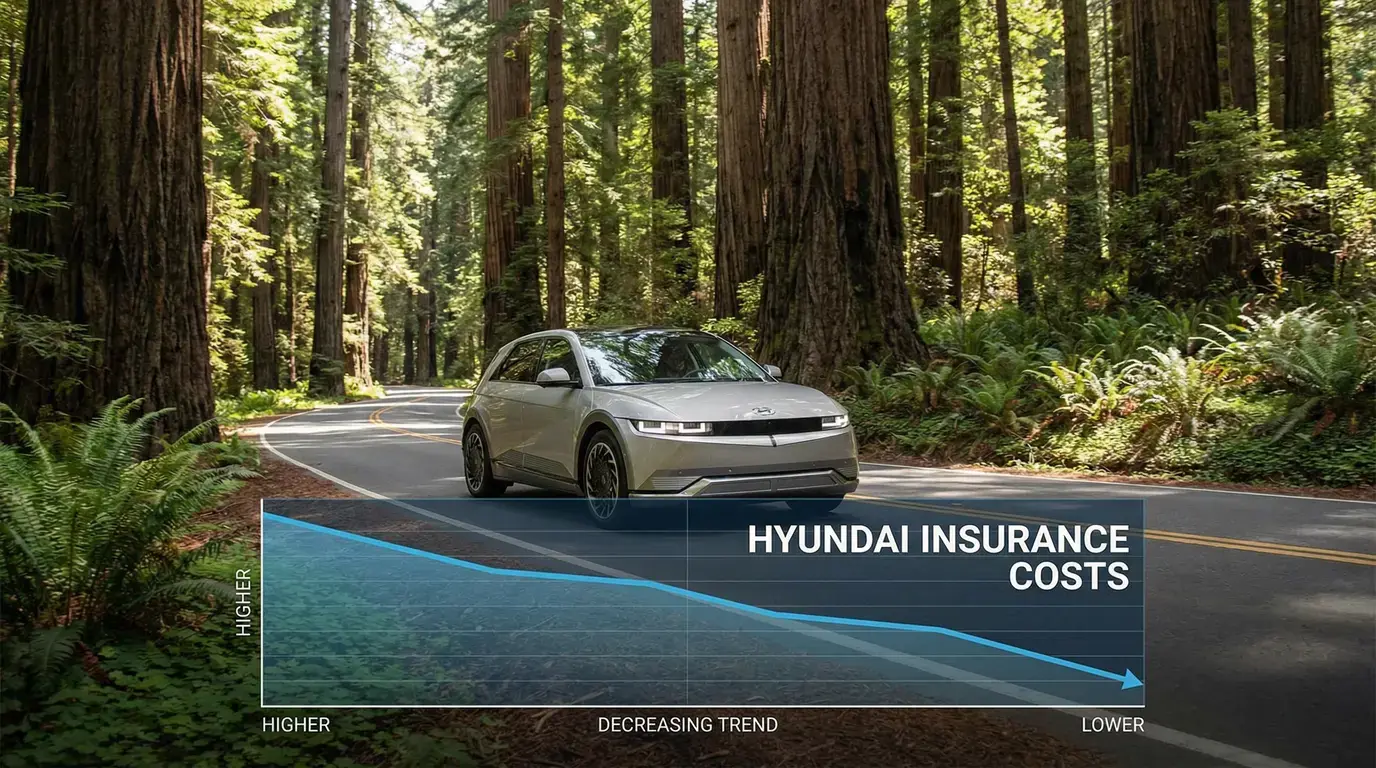
In general, Hyundai vehicles tend to show competitive insurance rates, often around or even below the national average. This guide breaks down typical cost ranges for popular Hyundai models, highlights top insurers for Hyundai owners, and shares practical strategies to help you save on premiums.
Key Takeaways
- Hyundai insurance costs generally align with or are below the national average, ranging from $1,305 to $2,371 annually.
- The Hyundai Kona and Tucson are typically the cheapest models to insure, while the Palisade and IONIQ 5 are among the most expensive.
- USAA, Erie, and GEICO frequently offer the lowest rates for Hyundai owners, though regional differences apply.
- Driver profile (age, driving record, credit) and vehicle features (safety ratings, repair costs) are primary rate determinants.
- Hyundai's past theft issues for certain 2011-2022 models have been largely mitigated by software updates, reducing their impact on current rates for newer/upgraded vehicles.
- Discounts for safety features, higher deductibles, and usage-based insurance can help lower premiums.
What is the Average Hyundai Insurance Cost in 2026?
The national average annual premium for Hyundai vehicles in 2026 ranges from approximately $1,305 to $2,371 across all models. This positions Hyundai favorably, often closely aligning with or even below the national average for car insurance, which typically sits around $1,311.
Hyundai's competitive rates are driven by several key factors:
- Safety Ratings: Many Hyundai models achieve high safety ratings, including IIHS Top Safety Pick and NHTSA 5-Star Overall Safety Ratings, reducing the risk of severe injuries and claims.
- Repair Costs: For many gasoline models, repair costs remain manageable compared to luxury or performance brands, which helps keep premiums lower.
- Theft Rates: While specific model years faced theft vulnerabilities, Hyundai has implemented software upgrades and other measures to combat this, stabilizing overall theft risk for newer models.
Overall, Hyundai's average insurance costs are significantly lower than many other popular brands, often by hundreds of dollars annually.
Hyundai Insurance Costs by Model: Complete Breakdown
Insurance premiums vary considerably among Hyundai models due to differences in MSRP, safety features, repair costs, and theft appeal. The following breakdown highlights typical annual full coverage costs for popular 2026 Hyundai vehicles:
The table below provides a clear comparison of average annual insurance premiums for various popular Hyundai models, helping you identify which vehicles are typically more or less expensive to insure.
| Hyundai Model | Avg Annual Premium | Insurance Tier | Key Cost Factor |
|---|---|---|---|
| Hyundai Kona | $1,873–$1,960 | Least Expensive | Compact size, good safety, lower repair costs (Insuranceopedia) |
| Hyundai Tucson | $1,899–$1,975 | Least Expensive | Strong safety ratings, popular compact SUV, lower theft risk (InsuredBetter) |
| Hyundai Elantra | $1,355–$2,375 | Affordable Sedan | Excellent safety features, low MSRP, efficient (Insurify) |
| Hyundai Santa Fe | $1,254–$2,430 | Mid-Range SUV | Mid-size SUV, good safety, higher value than Tucson (CarEdge) |
| Hyundai Sonata | $1,406–$2,579 | Mid-Range Sedan | Higher MSRP than Elantra, good safety ratings (Insuranceopedia) |
| Hyundai Palisade | $2,921–$3,049 | Most Expensive | Large SUV, higher MSRP, potentially higher repair costs (Insuranceopedia) |
| Hyundai IONIQ 5 | $2,354–$3,020 | Specialty EV | Higher repair costs for EV components, advanced tech (Insuranceopedia) |
Hyundai Sedan Rates: Elantra, Sonata, Accent
The Hyundai Elantra is often one of the least expensive Hyundai models to insure, with full coverage ranging from $1,181 (state minimum) to $2,282 annually. Its solid safety features and competitive MSRP contribute to its affordability. The Hyundai Sonata, a larger sedan, typically costs more, averaging between $1,406 and $2,579 annually. The Accent, though discontinued post-2022, also remains an affordable option for used car buyers, with rates from $1,304 to $2,470.
Hyundai SUV/Crossover Rates: Tucson, Santa Fe, Palisade, Kona
Compact SUVs like the Hyundai Kona ($1,873–$1,960 annually) and Hyundai Tucson ($1,899–$1,975 annually) are among the cheapest Hyundai models to insure. The Hyundai Santa Fe, a mid-size SUV, generally falls in the mid-range for insurance costs, averaging $1,254 to $2,430 annually. The larger Hyundai Palisade is typically the most expensive SUV to insure, with costs between $2,921 and $3,049 annually due to its size, higher MSRP, and potential repair costs.
Hyundai Performance/Luxury Rates: Ioniq 5, Ioniq 6, Genesis models
Electric vehicles like the Hyundai IONIQ 5 can be slightly more expensive to insure than their gasoline counterparts, largely due to higher repair costs associated with advanced EV technology and batteries. The IONIQ 5 averages around $2,354–$3,020 annually for good drivers. While not covered in detail here, Genesis models (Hyundai's luxury division) typically command higher premiums due to their luxury status, advanced technology, and higher repair costs.
Top Insurance Companies for Hyundai Owners: Rate Comparison
Identifying the right insurer is key to securing competitive rates for your Hyundai. In 2026, several major insurers consistently offer lower premiums for Hyundai vehicles:
- USAA: Consistently provides some of the lowest rates, averaging $1,096–$1,407 annually for eligible drivers (military affiliation required).
- Erie: Offers highly competitive rates, often in the range of $1,280–$1,915 annually, and is frequently the cheapest for models like the Santa Fe.
- GEICO: A top contender for widely available low rates, with an average of $1,731–$2,106 annually for full coverage. For example, the Hyundai Elantra can be insured for as low as $1,047 per year with GEICO.
- State Farm: Offers competitive rates around $1,461–$2,387 annually, often ranking well across various Hyundai models.
Regional variations mean that the cheapest insurer can differ based on your location. It is always recommended to compare quotes from multiple providers.
Factors That Affect Your Hyundai Insurance Rate
Many variables influence your Hyundai insurance premiums. Understanding these factors can help you manage costs:
- Driver-Specific Factors: Your age, driving record, and credit score significantly impact premiums. Younger drivers and those with accidents or poor credit typically pay higher rates.
- Vehicle-Specific Factors: The model year, trim level, safety features (like Hyundai SmartSense), and anti-theft systems all play a role. Vehicles with higher safety ratings and lower repair costs generally have lower premiums.
- Hyundai's Theft Prevention Issues: Certain 2011-2022 Hyundai models without electronic immobilizers faced elevated theft rates. While software upgrades have reduced theft claims by 46% for upgraded vehicles, some insurers temporarily restricted coverage for affected models (ABC7 Chicago). This historical context can still influence perceptions and rates for some older, non-upgraded models.
- Coverage Choices: The type and amount of coverage you choose (liability, comprehensive, collision) directly impact your premiums. Higher liability limits and full coverage options increase costs.
How to Lower Your Hyundai Insurance Costs
Hyundai owners have several avenues to reduce their insurance premiums:
- Request Specific Discounts: Inquire about discounts for Hyundai SmartSense safety technology, anti-theft systems, bundling home and auto policies, and maintaining a clean driving record.
- Increase Deductibles: Opting for higher deductibles on comprehensive and collision coverage can significantly lower your annual premium, though you'll pay more out-of-pocket if you file a claim.
- Usage-Based Insurance Programs: Programs like those enabled by Hyundai's Blue Link service, partnering with Verisk Data Exchange, can offer discounts based on safe driving habits (PRNewswire).
- Shop Around Regularly: Insurance rates can vary by hundreds of dollars between providers for the same coverage. Compare quotes from 3-5 companies annually or whenever your policy renews.
Finding the Best Insurance Rate for Your Hyundai
Insuring a Hyundai can be an affordable endeavor, especially with models like the Elantra, Kona, and Tucson consistently offering competitive rates. While specific models like the Palisade and IONIQ 5 may command higher premiums due to their value and repair complexity, Hyundai's overall emphasis on safety and value helps keep the brand's insurance costs manageable.
To secure the best rate for your Hyundai, it is essential to be proactive. Always obtain quotes from at least 3-5 different insurance providers, verify your eligibility for all applicable discounts, and review your policy annually. By balancing adequate coverage with smart shopping strategies, you can ensure you're getting the most value for your insurance dollar.
Frequently Asked Questions about Hyundai Car Insurance
Based on AI analysis of real-world owner reports and national insurance data, Hyundai car insurance typically ranges from about $1,100 to $2,200 per year for full coverage. Most drivers report paying between $1,300 and $1,800 annually, depending on model, location, coverage choices, and driving history.
The Hyundai Kona and Hyundai Tucson are usually the least expensive models to insure. Their compact size, strong safety ratings, and lower repair costs help keep premiums lower than larger SUVs or electric models.
The Hyundai Palisade and Hyundai IONIQ 5 tend to have the highest insurance costs. The Palisade's higher value and repair costs, along with the IONIQ 5's advanced EV technology and battery replacement costs, typically lead to higher premiums.
Certain 2011–2022 Hyundai models without electronic immobilizers experienced higher theft rates. However, Hyundai's free anti-theft software update has reduced theft claims by about 46% for upgraded vehicles. Newer models and updated vehicles are far less affected, though some older, non-upgraded cars may still see higher rates.
In 2026, USAA, Erie, and GEICO consistently offer some of the most competitive rates for Hyundai vehicles. USAA often has the lowest premiums for eligible drivers, while GEICO and Erie provide strong pricing for a wide range of drivers. Rates vary by state, so comparing multiple quotes is essential.
Hyundai SmartSense and other safety technologies can reduce premiums by 5–15%, depending on the insurer. Features like automatic emergency braking, lane-keeping assist, blind-spot monitoring, and anti-theft systems are commonly recognized for discounts.
Yes. Hyundai insurance costs often fall at or slightly below the national average, which is roughly $1,311 per year. Many Hyundai models are priced lower to insure than comparable vehicles from other mainstream brands.
Generally, yes. Models like the Hyundai IONIQ 5 typically cost more to insure than gas-powered Hyundais. Higher repair costs for EV batteries and advanced electronics are the main reasons for the price difference.